Heat & Sand – Protecting Your RC Car’s Electronics in Qatar’s Climate
Any RC racer who’s driven across the Gulf for more than a season has a version of the same story: a car that ran perfectly for months suddenly starts losing power, grinding, or overheating — and the cause is almost never a bad part. It’s accumulated sand and heat, doing exactly what they do to every RC car eventually, just faster here than most manufacturer manuals assume. This guide covers what actually protects your car, based on what hobbyists in Qatar, the UAE, Saudi Arabia, and across the wider Gulf region have learned the hard way.
Why Gulf sand is different from ordinary dirt
Fine desert sand — the kind common from the dunes outside Doha to the deserts of the UAE and Saudi Arabia — works its way into bearings, gearboxes, and motor vents far more easily than coarser dirt found elsewhere. Left unchecked, it accelerates bearing wear and can cause a motor to overheat by blocking airflow through its vents. The finer the sand, the further it travels into sealed and semi-sealed components, which is exactly why a car that performs fine in a temperate climate can wear out noticeably faster here without adjusted maintenance habits.
Sand’s effect on bearings, gears, and motors
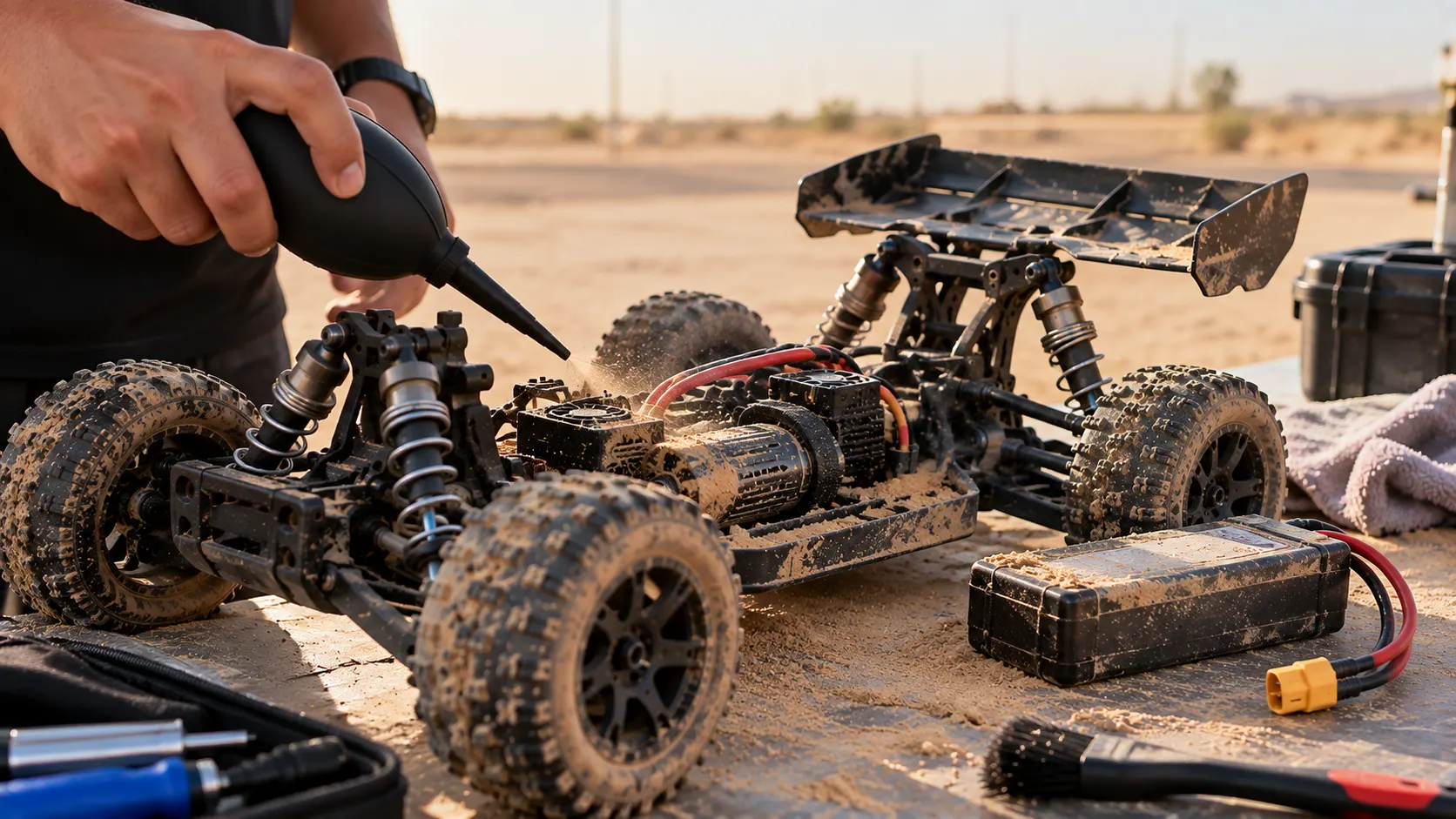
Sand trapped inside a bearing acts like grinding paste every time the wheel turns, wearing down the races and shortening bearing life dramatically. In gearboxes, sand mixed with grease turns abrasive rather than lubricating. In motors — brushed or brushless — sand blocking cooling vents raises operating temperature, which reduces both performance and lifespan. After every sandy session, blow out the chassis and motor with compressed air (never water) and wipe down exposed metal parts; sand trapped against metal, combined with humidity, is also a fast route to corrosion.
Heat and battery life
Gulf summer ambient temperatures alone can push a battery close to its safe operating range before you’ve even driven it. Heat degrades LiPo cells faster over time and makes charging genuinely riskier. Never store batteries in a car parked in direct sun, and let a battery cool to room temperature before charging if it’s been sitting in heat — charging a hot LiPo is a real fire risk, not an exaggerated one. Where possible, drive during cooler early-morning or evening hours; this protects your electronics and extends motor and battery lifespan alike. Our full RC battery guide covers safe charging and storage voltage in detail.
ESCs need airflow — don’t let sand or heat block it
Your ESC (electronic speed controller) manages significant current and generates heat under load. A layer of packed sand or dust over its heatsink fins reduces cooling and can trigger thermal cutoffs mid-run, cutting your session short — a frustrating and completely avoidable failure. Keep the ESC’s vents clear after every drive, and consider a dust cover or sealed enclosure if you frequently drive on loose, open sand.
Tires, shocks, and suspension take the abrasion
Sand acts like fine sandpaper on foam tire inserts, shock shafts, and dust boots. Check shock boots and seals regularly for sand ingress — a torn boot lets sand straight into the shock’s oil, ruining its damping. Keep a spare tire set on hand, since sand driving wears tread and foam inserts noticeably faster than pavement does, whether you’re driving in Qatar or anywhere else across the Gulf.
Hobby World Team Tip
The habit that separates a car that lasts two years from one that needs a rebuild after six months isn’t expensive gear — it’s a five-minute routine done every single time, not just “when it looks dusty.” Sand you can’t see is still doing damage. We tell every customer who drives regularly on open ground: treat the post-drive clean as part of driving, not an optional extra. It’s the cheapest maintenance you’ll ever do.
A simple after-drive routine (5 minutes, every session)
- Blow out the chassis, motor, and gearbox with compressed air — never water.
- Wipe down exposed metal parts to prevent corrosion from trapped sand and humidity.
- Check shock boots and seals for tears or sand ingress.
- Inspect tire tread and foam inserts for excess wear.
- Store the car and all batteries indoors, away from direct heat and sunlight.
Built into a regular habit, this adds real months — sometimes years — to your car’s working life across Gulf conditions.
When to re-lubricate
Check and re-grease exposed gears roughly monthly with regular sand exposure, more often if you drive weekly on open desert terrain. If you notice gritty resistance in steering or drivetrain movement, that’s usually sand in the mechanism, not a mechanical fault — clean before assuming something is broken.
How often should I clean my RC car after driving on sand?
After every sandy session. A quick 5-minute compressed-air clean prevents the buildup that causes most sand-related wear and failures.
Can I use water to clean sand off my RC car?
No — water can damage electronics and washes sand deeper into bearings and gearboxes rather than removing it. Use compressed air instead.
Why does my RC car's motor overheat in Gulf summer?
High ambient heat combined with sand-blocked motor vents is the most common cause. Clean vents regularly and avoid driving during the hottest midday hours.
Where should I store RC batteries in hot weather?
Indoors, away from direct sunlight and never inside a parked car. Let batteries cool to room temperature before charging if they’ve been exposed to heat.
Do RC cars need different maintenance in the GCC than elsewhere?
Yes — finer sand and higher ambient heat mean more frequent cleaning, more attention to battery storage temperature, and faster part wear than in temperate climates.